The Library · Insights
Deep dives across data, automation & AI
145 in-depth articles — from Excel foundations to production machine learning. Filter by topic or difficulty to find exactly what you need.
AI & Machine LearningFoundation
Retrieval Failure Modes: Why RAG Systems Return Wrong or Irrelevant Results and How to Diagnose Them
RAG systems fail in predictable ways — and most developers spend hours guessing when they should be diagnosing. This lesson breaks down the five core retrieval failure modes, shows you how to distinguish them from generation failures, and gives you concrete diagnostic tools to find and fix the root cause every time.
19 min read
AI & Machine LearningFoundation
Prompt Injection Attacks: What They Are and How to Defend Against Them in LLM Applications
Prompt injection is the most dangerous and misunderstood security threat in LLM application development. Learn how direct and indirect attacks work, why you can't just "tell the model to ignore them," and how to build defense-in-depth systems that actually hold up in production.
18 min read

AI & Machine LearningExpert
Adversarial Prompting and Injection Attacks: How to Identify, Test, and Defend Enterprise AI Pipelines Against Manipulation
Prompt injection and adversarial attacks are the active security frontier of enterprise AI—and most teams are underprepared. This expert-level lesson teaches you to identify every major attack class, build a red-team testing harness, and implement layered defenses across your prompt, retrieval, output, and orchestration layers.
30 min read

AI & Machine LearningExpert
Stateful Multi-Turn RAG: Managing Conversation History, Context Carryover, and Session Memory Across Long User Interactions
Single-turn RAG breaks the moment users start asking follow-up questions. This deep-dive lesson teaches you how to build genuine conversational memory into your RAG pipeline — with query reformulation, rolling history compression, session persistence, and retrieval deduplication that actually works in production.
27 min read
AI & Machine LearningExpert
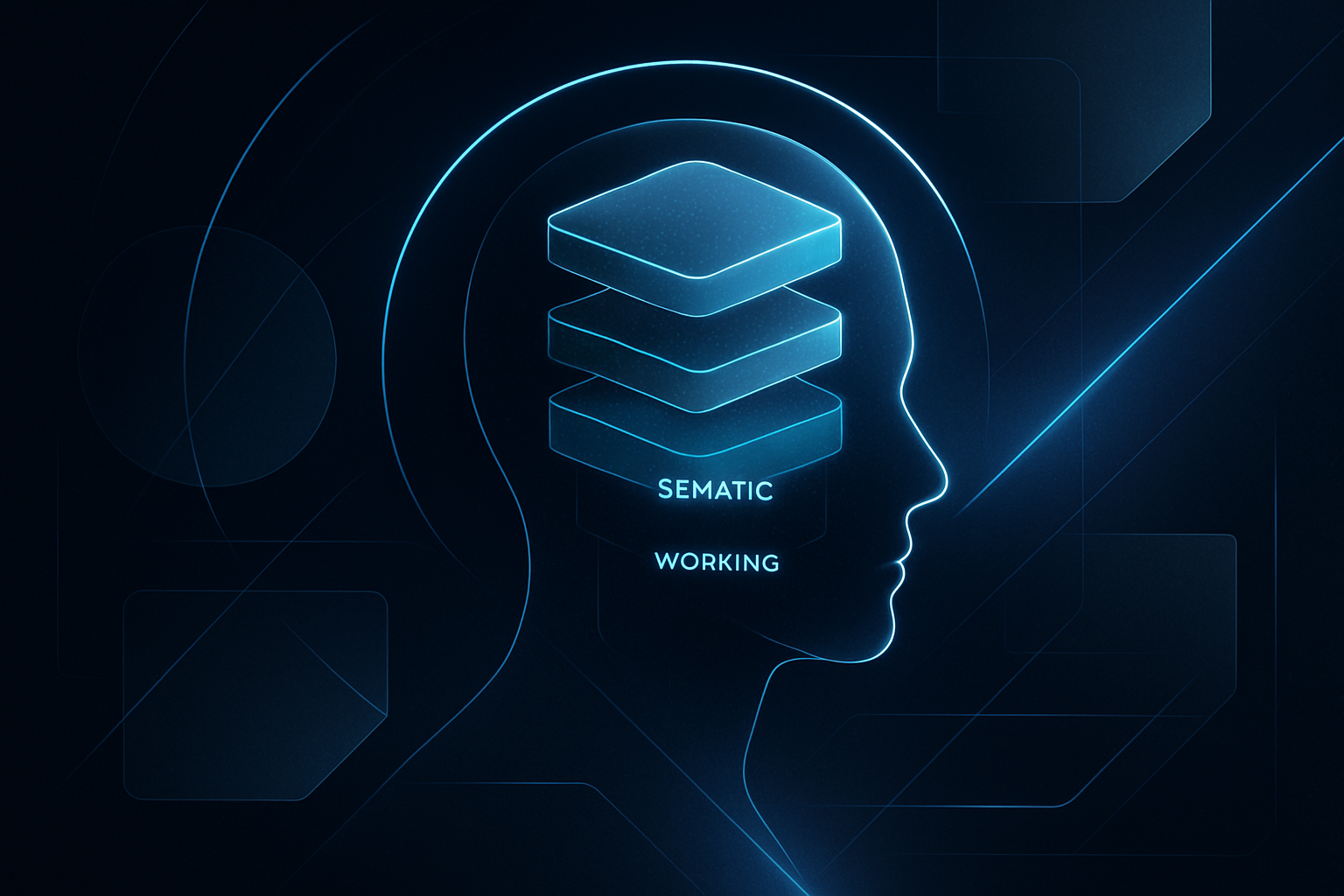
Implementing Structured Agent Memory: Building Long-Term Persistent State with Episodic, Semantic, and Working Memory Layers for Production LLM Agents
Most LLM agents are amnesiac by default — every conversation starts cold, no matter how much history exists. This deep-dive lesson teaches you to build a production-grade, three-layer memory architecture with episodic event storage, semantic fact extraction, and intelligent working memory management that makes your agents genuinely smarter over time.
31 min read

AI & Machine LearningPractitioner
Put Claude's Built-In Skills to Work: The Power User's Field Guide*
22 min read

AI & Machine LearningPractitioner
Reciprocal Rank Fusion: Merging Multiple Retrieval Results into a Single Ranked List for Hybrid RAG Pipelines
Hybrid RAG pipelines combine keyword and semantic search — but merging their results without breaking both is harder than it sounds. This lesson teaches you Reciprocal Rank Fusion from the formula up through a complete, production-ready Python implementation, so you can build retrievers that outperform either approach alone.
23 min read
AI & Machine LearningPractitioner
Building a Citation and Source Attribution System for RAG: Linking LLM Responses Back to Source Documents with Confidence Scores
Most RAG systems retrieve documents and generate answers — but never connect the two in a way users can actually trust or verify. This lesson builds a complete citation pipeline that maps every LLM claim back to a specific source chunk, complete with composite confidence scores and hallucination detection.
20 min read

AI & Machine LearningPractitioner
AI-Assisted Data Cleaning: Using LLMs to Standardize, Deduplicate, and Validate Messy Datasets
Messy data doesn't just waste time — it poisons every analysis downstream. Learn how to build a Python pipeline that uses LLMs for the parts of data cleaning that require real judgment: normalizing company names and job titles, catching semantic duplicates that fuzzy matching misses, and validating records for logical consistency.
22 min read

AI & Machine LearningFoundation
Understanding Similarity Search: Cosine, Dot Product, and Euclidean Distance for Vector Retrieval
Before you build a RAG pipeline, you need to understand what "similar" actually means in vector space. This lesson breaks down cosine similarity, dot product, and Euclidean distance from first principles — with working Python code and real retrieval scenarios — so you can make the right choice every time.
15 min read

AI & Machine LearningFoundation
Retrieval-Augmented Generation Explained: How RAG Works and When to Use It
LLMs are powerful reasoners, but they can't answer questions about your data — unless you give them a way to look things up. This lesson explains exactly how RAG works, walks you through building a real pipeline in Python, and shows you when to use it versus other approaches.
15 min read

AI & Machine LearningFoundation
What Is Generative AI? A Plain-Language Guide for Data and Business Professionals
Generative AI is reshaping how data and business teams work — but most explanations either oversimplify it or drown you in jargon. This guide explains how large language models actually work, where generative AI excels, where it fails, and how to use it intelligently in professional settings.
17 min read